
-
Standard deviations in Excel: What’s it for? How do I calculate it?
To analyze a set of numerical data, the mean is often used. However, this parameter has some shortcomings that do not always reflect the reality of the data. Fortunately, other statistical tools allow for a deeper analysis. This is notably the case with the standard deviation. So, what is it? What is its purpose? And […]
Read more -
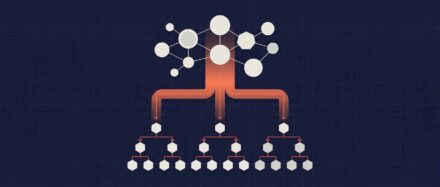
Decoding DNS: Exploring the Domain Name System and Its Functions
The Domain Name System (DNS) is one of the key elements enabling the Internet to function. Like a virtual telephone directory, it converts domain names into IP addresses to enable Internet users to access sites. Find out everything you need to know about this system and its importance in Data Science! In the early days […]
Read more -
Scikit Learn: Discover the Python library dedicated to Machine Learning
If you study data and want to derive information from it, you will often need to process the data, modify it and, above all, build models capable of learning patterns in your data for a chosen problem. There are a number of open source libraries available to do this, but the best-known of these is surely Scikit Learn.
Read more -
Business Analyst: definition, missions, training, salary
If there’s one job that has been revolutionized by the Big Data era, it’s that of Business Analyst. Exploiting data is now an integral part of the job, and mastering data analysis techniques is now often a necessity. Let’s take a closer look at this profession through its missions, skills requirements and recent developments.
Read more -
Amazon Web Services (AWS): Unveiling the Power of the Amazon Cloud
Amazon Web Services or AWS is Amazon’s Cloud platform. Find out all you need to know: presentation, history, operation, services, benefits, training… Cloud computing is increasingly used in business, particularly for Data Science and Machine Learning. The most widely used Cloud platform is Amazon Web Services.
Read more -
Python Tutorial: Reasons and Strategies for Learning the Language
Python is an open source programming language created in 1991. Over time, it has grown in popularity among application and web developers. Python is an object-oriented programming language, which means it aims to represent real-world elements in virtual form.
Read more -
SVM (Support Vector Machines) Unveiled: Understanding, Implementation, Significance
Welcome to the first part of this mini-series dedicated to SVM. When we think of Machine Learning, we generally think of recent methods that are still poorly understood and used empirically, like a sorcerer’s apprentice. Indeed, genetic algorithms, neural networks, boosting… these algorithms are often described as “black boxes”. In other words, while it’s easy […]
Read more -
Bash (Bourne-Again shell): principle, benefits, training
Bash is the most popular shell, widely used in the field of computer programming, as well as for Data Science and Machine Learning. Discover everything you need to know about it: how it works, its utility, benefits, and available training.
Read more -
Data Architect training: skills, salary, education
The Data Architect is a professional responsible for designing a company’s data architecture. He or she defines the data collection and storage system, enabling Data Scientists to analyze the data. Find out how to train to become a Data Architect in this highly sought-after profession!
Read more -
SVM (Support Vector Machines) Unveiled: Understanding, Implementation, Significance : Part 2
Welcome to the second part of this dossier dedicated to Vector Machine Support. In the previous article, we detailed the operation and main shortcomings of Maximal Margin Classifiers. Our aim now is to allow our algorithm to make a certain number of errors when selecting the separation line. This is known as the “soft margin”. […]
Read more









The newsletter of the future
Get a glimpse of the future straight to your inbox. Subscribe to discover tomorrow’s tech trends, exclusive tips, and offers just for our community.
