
Nvidia CEO Jensen Huang unveiled a major strategic shift at GTC 2026 on Monday, pivoting the chip giant from AI training to inference-the real-time deployment of artificial intelligence-while doubling its market forecast to $1 trillion through 2027. The company introduced its Vera Rubin AI Platform, combining new CPUs and GPUs designed specifically for running AI applications at scale, as demand shifts from building AI models to deploying them globally.
The centerpiece of the new platform is the Nvidia Vera CPU, featuring 88 custom “Olympus” cores that deliver 50% faster performance and twice the energy efficiency compared to traditional processors, according to Constellation Research. The chip, scheduled for release in the second half of 2026, represents Nvidia’s first major processor designed specifically for inference workloads rather than training AI models.
Major cloud providers including AWS, Microsoft Azure, and Google Cloud have already committed to adopting the Vera CPU platform, alongside equipment manufacturers Dell and HPE, signaling broad industry support for Nvidia’s new direction. The company also announced a strategic partnership with Groq to incorporate its Language Processing Unit technology, further specializing the hardware stack for real-time AI applications.
Market Dynamics Shift Toward Inference
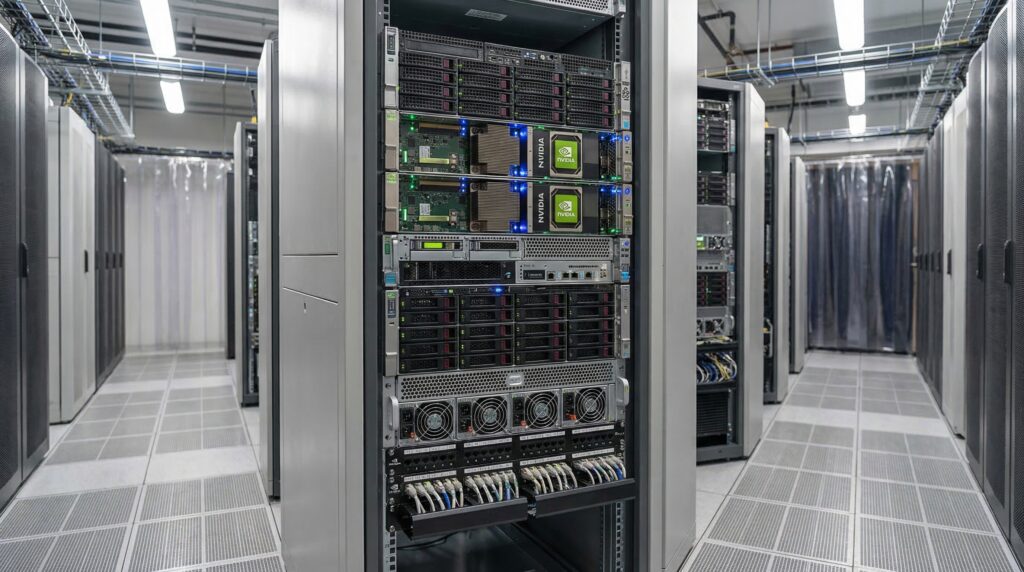
The timing of Nvidia’s pivot reflects fundamental changes in the AI market. According to the Educational Technology and Change Journal, 2026 will mark the year when total spending on AI inference accelerators surpasses spending on training accelerators, as companies shift focus from building models to deploying them at scale.
The global AI inference market, valued at $97.24 billion in 2024, is projected to reach $253.75 billion by 2030, according to industry analysis cited by the Educational Technology and Change Journal. This explosive growth is driven by “agentic AI” systems that continuously perceive, reason, and act autonomously, creating constant demand for real-time computing power.
Huang described the company as the “world’s first vertically integrated, but horizontally open company,” signaling Nvidia’s intention to control the entire AI infrastructure stack while maintaining partnerships, according to Constellation Research. The strategy includes the Vera Rubin DSX AI Factory Reference Design, providing modular blueprints for customers to build large-scale, energy-efficient AI infrastructure.
The move also positions Nvidia against emerging competition from companies like Meta, which are developing custom inference chips. Key applications driving demand include autonomous vehicles, medical diagnostics, real-time copilots, and AI-powered recommendation systems operating at global scale, spanning industries from healthcare to telecommunications.
Sources
- constellationr.com
- etcjournal.com