Decoded©



-
Databricks Lakewatch disrupts SIEM with open agentic platform
Databricks announced its entry into the cybersecurity market on March 24, 2026, launching Lakewatch, an AI-powered security platform that promises to slash costs by up to 80% compared to traditional systems. The new platform uses autonomous AI agents to automate threat detection and response while storing data in customers' own cloud environments, directly challenging market leaders Splunk and Microsoft Sentinel.
Read more -
Google Cloud GKE sparks open AI platform shift
Google Cloud announced major updates to its Google Kubernetes Engine platform at KubeCon Europe 2026 on Monday, unifying its management systems and open-sourcing key components to position GKE as the leading platform for artificial intelligence workloads. The changes allow customers to mix automated and manual infrastructure management within the same system while introducing specialized features for AI agents and large-scale model training.
Read more -
Anthropic’s Claude AI sparks autonomous computer control shift
Anthropic launched a new feature Tuesday that lets its AI assistants Claude Code and Claude Cowork directly control users' computers, including mouse movements, keyboard inputs, and screen navigation. The autonomous computer control capability, available now as a research preview for Claude Pro and Max subscribers on macOS, requires explicit user permission before taking any action.
Read more -
Mistral AI reveals proposed levy funding European cultural creators
Mistral AI CEO Arthur Mensch has proposed a mandatory levy of 1% to 1.5% on AI companies' European revenues to compensate cultural creators whose content trains artificial intelligence models. The levy would apply to all firms commercializing AI in the EU—including OpenAI, Google, and Microsoft—and could generate hundreds of millions of euros annually for a central European fund supporting the creative arts.
Read more -
Google’s AI headline experiment disrupts news publisher strategies
Google is testing artificial intelligence to automatically rewrite news headlines in its search results, sparking alarm from publishers who say the AI-generated versions often distort their articles' meaning. The tech giant confirmed the "small" experiment aims to better match titles to user searches, but documented cases show the AI has contradicted stories' conclusions and stripped critical context from headlines.
Read more -
Formal framework reshapes biomedical deep learning model semantics
Researchers at Yale and IBM have unveiled a new framework to decode what artificial intelligence models actually "understand" about the world, according to a study published in Nature Machine Intelligence. The approach, developed by Jonathan Warrell and colleagues, applies philosophy of science principles to systematically analyze how AI systems create internal representations of real-world concepts—a critical step toward making these powerful but opaque technologies more interpretable.
Read more -
Snyk Agent Security, Evo AI-SPM disrupt AI governance
Security firm Snyk launched Agent Security on Monday, a platform designed to protect companies from ungoverned AI agents that pose cybersecurity risks. The solution monitors and controls autonomous AI systems from development through deployment, addressing the growing "Shadow AI" problem where unauthorized AI components operate without oversight. The platform includes Snyk's newly released Evo AI-SPM engine for scanning, validating and enforcing security policies on AI-generated code.
Read more -
OpenAI unified desktop superapp triggers strategic software consolidation
OpenAI will merge ChatGPT, Codex, and its Atlas browser into a single desktop superapp to streamline its product lineup and compete with rival Anthropic, according to internal communications obtained by reporters. The consolidated platform aims to create an integrated workspace for knowledge workers and developers while addressing the company's current product fragmentation issues.
Read more -
PyTorch 2.11 release fuels major AI performance upgrades
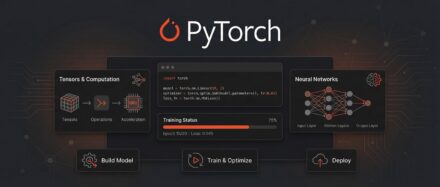
PyTorch released version 2.11 today, delivering performance improvements of up to 600x for specific AI operations while adding support for next-generation NVIDIA and Intel GPUs. The update, built from 2,723 contributions by 432 developers, introduces differentiable collectives for distributed training, FlashAttention-4 backend, and expanded Apple Silicon compatibility, marking a significant advancement for machine learning researchers and developers worldwide.
Read more








The newsletter of the future
Get a glimpse of the future straight to your inbox. Subscribe to discover tomorrow’s tech trends, exclusive tips, and offers just for our community.