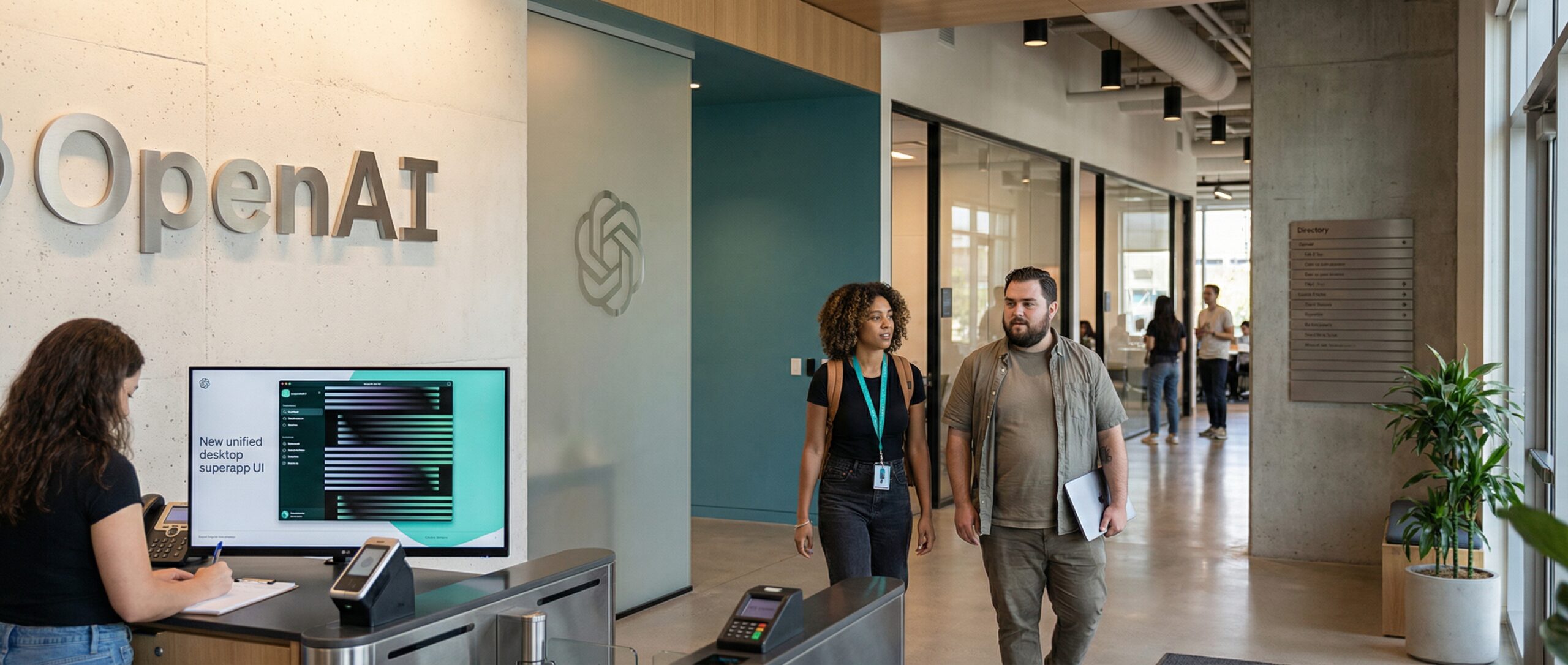
OpenAI will merge ChatGPT, Codex, and its Atlas browser into a single desktop superapp to streamline its product lineup and compete with rival Anthropic, according to internal communications obtained by reporters. The consolidated platform aims to create an integrated workspace for knowledge workers and developers while addressing the company’s current product fragmentation issues.
The unified platform will initially launch for Windows and macOS, with mobile versions of ChatGPT remaining unchanged, according to The Verge. CEO Fidji Simo acknowledged in internal communications that having multiple separate applications “has been slowing us down and making it harder to hit the quality bar we want,” while warning against being “distracted by side quests.”
The strategic consolidation comes as Anthropic’s Claude Code has reportedly generated more than double the annualized revenue of OpenAI’s Codex assistant, according to ALM Corp. The move also positions OpenAI to better compete against integrated AI ecosystems from Microsoft’s Copilot and Google’s Gemini.
Technical Integration and Developer Impact

The superapp will feature tightly interwoven chat, coding, and browsing capabilities designed to enable novel cross-application workflows, The Verge reported. This architecture represents a significant shift from OpenAI’s current approach of offering specialized, standalone tools.
For developers, the consolidation signals a broader trend toward phasing out older specialized APIs in favor of a unified platform where coding assistance becomes a core capability, according to The Verge. The integrated system could transform the current ChatGPT plugin model into a more robust Software Development Kit (SDK), allowing third-party developers to build deeply integrated extensions.
Privacy and Security Concerns
The merger of personal conversations, proprietary code, and web browsing history into a single user profile creates unprecedented privacy challenges, The Verge reported. Security experts warn that a unified application with such deep access to users’ digital lives would become a high-value target for cyberattacks, where a single vulnerability could expose vast amounts of interconnected information.
The Atlas browser’s ability to take actions on users’ behalf introduces additional risks, including potential prompt injection attacks where malicious instructions on webpages could hijack the AI, according to ALM Corp. While OpenAI has acknowledged these vulnerabilities and is implementing safeguards, the risks remain a primary concern for enterprise customers.
No timeline for the superapp’s release has been announced, The Wall Street Journal reported, and OpenAI has not disclosed pricing details or whether existing standalone desktop applications will be discontinued. The consolidation is also viewed as preparation for a potential IPO, presenting a more cohesive product narrative to investors alongside the company’s recent CFO hiring.
Sources
- wsj.com
- theverge.com
- almcorp.com/blog