
OpenAI unveiled two new artificial intelligence models on March 17, 2026, GPT-5.4 mini and GPT-5.4 nano-designed to power faster, cheaper AI systems for developers building complex multi-agent applications. The models offer near-flagship performance at a fraction of the cost, with mini priced at $0.75 per million input tokens and nano at just $0.20, directly challenging competitors like Anthropic’s Claude and Google’s Gemini.
The new models excel in specialized benchmarks that matter most to developers. On the SWE-bench Pro, which measures ability to resolve real-world GitHub issues, GPT-5.4 mini scores 54.38%, remarkably close to the flagship GPT-5.4‘s approximately 57.4%, according to The New Stack. While specific scores for GPT-5.4 nano weren’t disclosed, the model reportedly surpasses the previous generation’s GPT-5 mini in coding capabilities.
In agentic workloads requiring tool interaction, the performance gap remains narrow. GPT-5.4 mini achieves 72.13% on the OSWorld-Verified benchmark, which tests proficiency in using computer operating systems to complete tasks, compared to the flagship’s 75.03%. GPT-5.4 nano scores 39.01% on the same benchmark, positioning it for high-volume, lightweight tasks like data extraction and classification rather than complex computer navigation.
Speed Meets Affordability
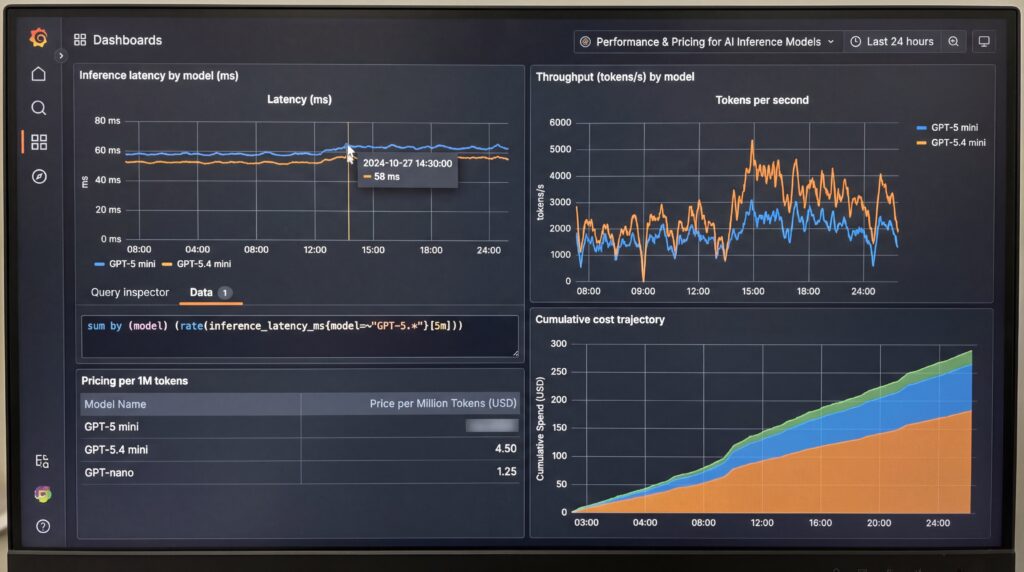
Beyond raw performance metrics, the models’ true innovation lies in their speed improvements. GPT-5.4 mini runs more than twice as fast as the previous GPT-5 mini model while maintaining competitive pricing at $4.50 per million output tokens. The nano variant, priced at $1.25 per million output tokens, became OpenAI’s most inexpensive model upon launch, The New Stack reported.
This pricing structure enables what industry observers call a new paradigm in AI development. Developers can now affordably delegate bulk computational work to these smaller models while reserving expensive frontier models for high-level planning and coordination. The approach makes sophisticated AI systems more scalable and economically viable for startups and enterprises alike.
Market Implications
The launch signals a broader industry shift toward multi-model strategies. Rather than relying on single, monolithic AI systems, advanced applications will increasingly leverage teams of specialized models. In this architecture, the most powerful model acts as an agent manager while smaller, faster models like mini and nano execute granular tasks.
OpenAI’s aggressive pricing directly challenges Anthropic’s Claude 4.5 Haiku and Google’s Gemini 3 Flash, both tailored for similar high-volume use cases. The models also compete with efficient open-source alternatives, including variants of Meta’s Llama, by offering compelling performance through managed APIs.
Sources
- thenewstack.io