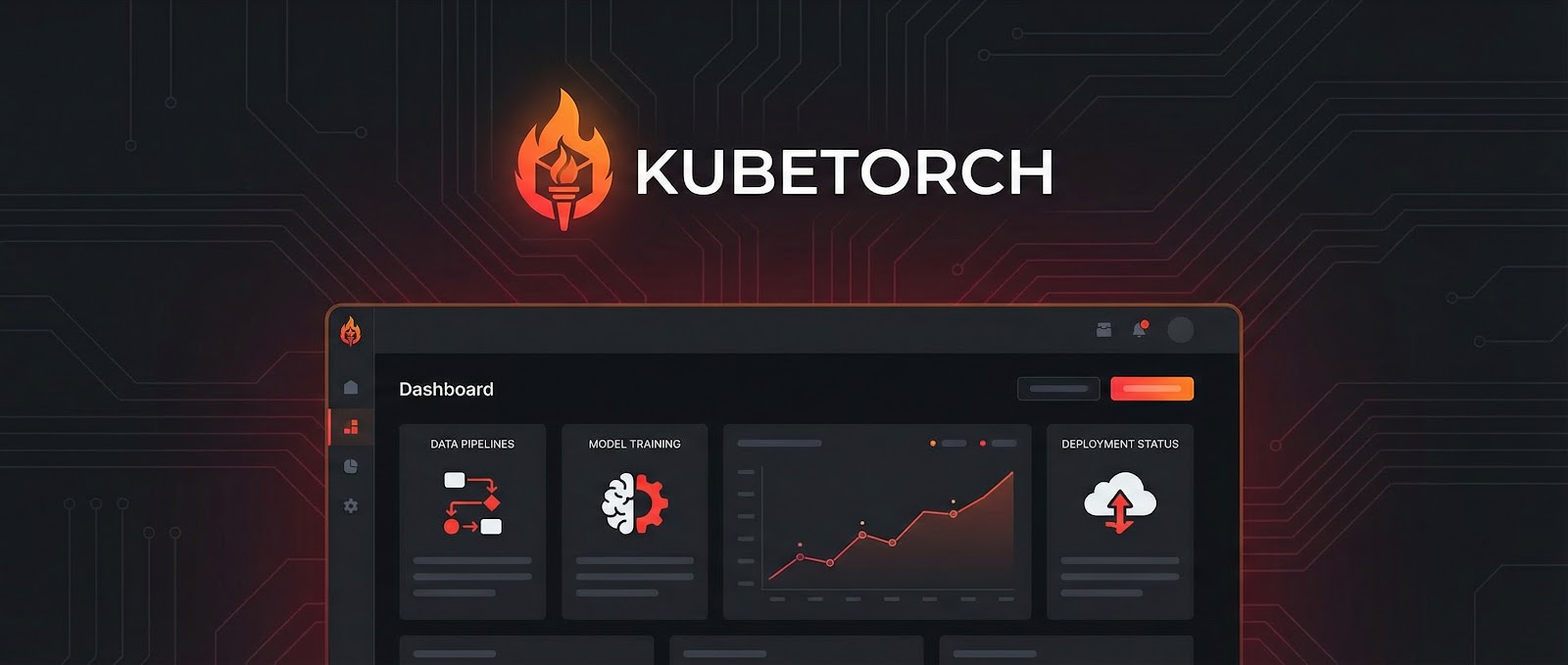
PyTorch has officially endorsed Kubetorch, a new open-source tool that lets developers run machine learning code on Kubernetes clusters using a simple Python command. The project streamlines ML workflows by allowing developers to execute functions remotely from their local machines, eliminating the complex container-based processes that have long slowed AI development cycles.
The announcement came on February 28, 2026, when Kubetorch was officially added to the PyTorch Ecosystem Landscape, according to the PyTorch Blog. The framework, developed by Runhouse and released under the Apache 2.0 license, introduces a .to() API that mirrors PyTorch’s familiar model deployment syntax, allowing developers to deploy functions to Kubernetes clusters with commands like remote_fn = my_fn.to(‘k8s-cluster’).
The system operates through two core components: a Python SDK that serves as the developer’s main interface, and a Kubernetes Operator that manages workload lifecycles on the cluster side. When developers make changes to their local code, the updates propagate to the cluster in seconds on the next function call, with remote environments and dependencies being cached for efficiency, according to project documentation on GitHub.
Kubetorch supports a comprehensive range of machine learning workloads including distributed training with PyTorch DDP, batch and online inference, reinforcement learning, model evaluations, and data processing. The framework is compatible with standard Kubernetes clusters and various GPU types, with official documentation highlighting its utility with high-performance hardware like NVIDIA H100 and T4 GPUs.
Competitive Advantage
The framework positions itself as a more accessible alternative to established MLOps platforms. Unlike Kubeflow and KServe, which typically require extensive YAML configuration and present steeper learning curves, Kubetorch’s Python-native approach abstracts away infrastructure complexity. Compared to Ray and TorchElastic, it offers a distinctive fault tolerance model by streaming exceptions directly back to the local client for handling, simplifying debugging during development, as detailed in the project’s GitHub repository.
A key innovation is the framework’s fault tolerance design. Hardware faults and software exceptions occurring in remote Kubernetes pods automatically propagate back to the local Python process, enabling developers to implement try…except blocks in their local code to catch and handle remote errors programmatically.
While the project shows promise for accelerating ML development cycles on Kubernetes, its documentation does not yet explicitly detail limitations or security considerations for production environments. As a nascent project still building community adoption, prospective users should monitor the official repository for updates on security hardening and production readiness.
Sources
- PyTorch Blog